
Cincinnati Previous Residents by Era
A Cincinnati address has two related trails. The property trail begins with a parcel, a legal description, and recorded transfers. The household trail uses dated directories, maps, and federal schedules. Neither one is a complete list of every person connected to a place. Together, they let a researcher separate a tax record, a deed party, and a printed address entry instead of treating them as the same fact.
| Source | Years It Covers | Where Held | What It Shows |
|---|---|---|---|
| Recorder name and instrument search | Normally from 31 May 1988 | Hamilton County Recorder Acclaim | Recorded parties, document dates, Book/Page, and indexed instrument details |
| Historic grantor and grantee indexes | Deed materials reach to 1794 | Recorder historic-index route | Book/Page bridge for earlier conveyances |
| Cincinnati directories and reverse directories | City directories from 1819; Pink Pages from 1925 | CHPL local-history collections | Dated names printed at an address or along a street |
| Federal census | 1790 through 1950 | NARA online and CHPL access | Household details for an enumeration year |
| Hamilton County image collection | Collection-specific, including deeds and mortgages 1794-1939 | FamilySearch and CHPL affiliate access | Browseable historical record images and listed series |
For recent previous residents, begin with the parcel and transfer details. For an address before the modern recorder search threshold, move deliberately to the historic index and Book/Page route. For a Cincinnati household question, use the printed directory year and a map before adding a census record. Each source has its own date and purpose.
Cincinnati Parcel Before Past Residents
The Hamilton County Auditor Property Search is the present-day starting point for a Cincinnati address. Search the address, capture the full 13-character parcel number when available, and save the situs address and legal description. The Auditor screen can show a tax-record name, tax-mailing field, transfer tab, and current versus previous owner labels. Those fields identify a tax and transfer lead, not every person who lived at the site.
Use the transfer tab to record the conveyance number, transfer date, amount, and the displayed prior and current parties. A low or zero amount can reflect an exempt transfer, and a January 1 date can be a placeholder. The Recorder guide directs researchers back to the ownership card or underlying instrument when those values look unusual. Cincinnati parcel history is strongest when the legal description remains continuous across the documents.
Note: A postal address and the Auditor situs address can differ, so compare the parcel map before treating a near match as the same Cincinnati property.
Cincinnati Previous Residents Deed Chain
For a property history, the recorded chain is more reliable than a sequence of similar names. Open Recorder Acclaim with the Auditor number, conveyance number, Book/Page, or a narrow party and date search. Confirm the instrument type, execution and recording dates, party roles, and legal description. A mortgage, release, lien, or correspondence address can be useful context without being a transfer of title.
- Resolve the Cincinnati address in the Auditor search and save the situs, parcel ID, legal description, transfer row, and access date.
- Use the conveyance number or Auditor number in Acclaim, then compare the indexed parties and document type to the property description.
- Record the conveyor or grantor and the conveyee or grantee exactly as displayed, along with document number, Book/Page, execution date, and recording date.
- Use the earlier grantee as the next owner lead, then find the preceding conveyance and repeat only while the legal description still fits.
- Pause at a changed lot, acreage, plat, or parcel description. A split, consolidation, corrective deed, or right-of-way action needs its own document check.
- Grantor and grantee
- The grantor, also called conveyor in an index, is the party transferring an interest. The grantee or conveyee is the party receiving that interest.
- Chain of title
- A dated sequence of recorded instruments that links a property interest backward through verified documents. It is not a list of every household.
- Legal description
- The recorded lot, subdivision, metes-and-bounds, or comparable land description. It is the durable link when a Cincinnati street number changes.
Cincinnati Recorder Before 1988
Acclaim's ordinary name method generally begins 31 May 1988. Earlier Cincinnati work uses the Recorder's historic deed indexes: select the relevant year and initial, identify the Book/Page, and inspect the deed-book image. The historic route covers material reaching back to 1794, but it is a search path, not proof that every image is equally searchable online.
The index entry should be transcribed before an image is interpreted. Older pages can be offset by a page or two in a digital viewer, so use the image pager around the cited page instead of accepting the first image as final. When Acclaim does not provide the needed image, use the Recorder counter or certified-copy route and retain the instrument number and Book/Page as the interim citation.
The Recorder's historic-records guide introduces the older-record path and the FamilySearch connection.
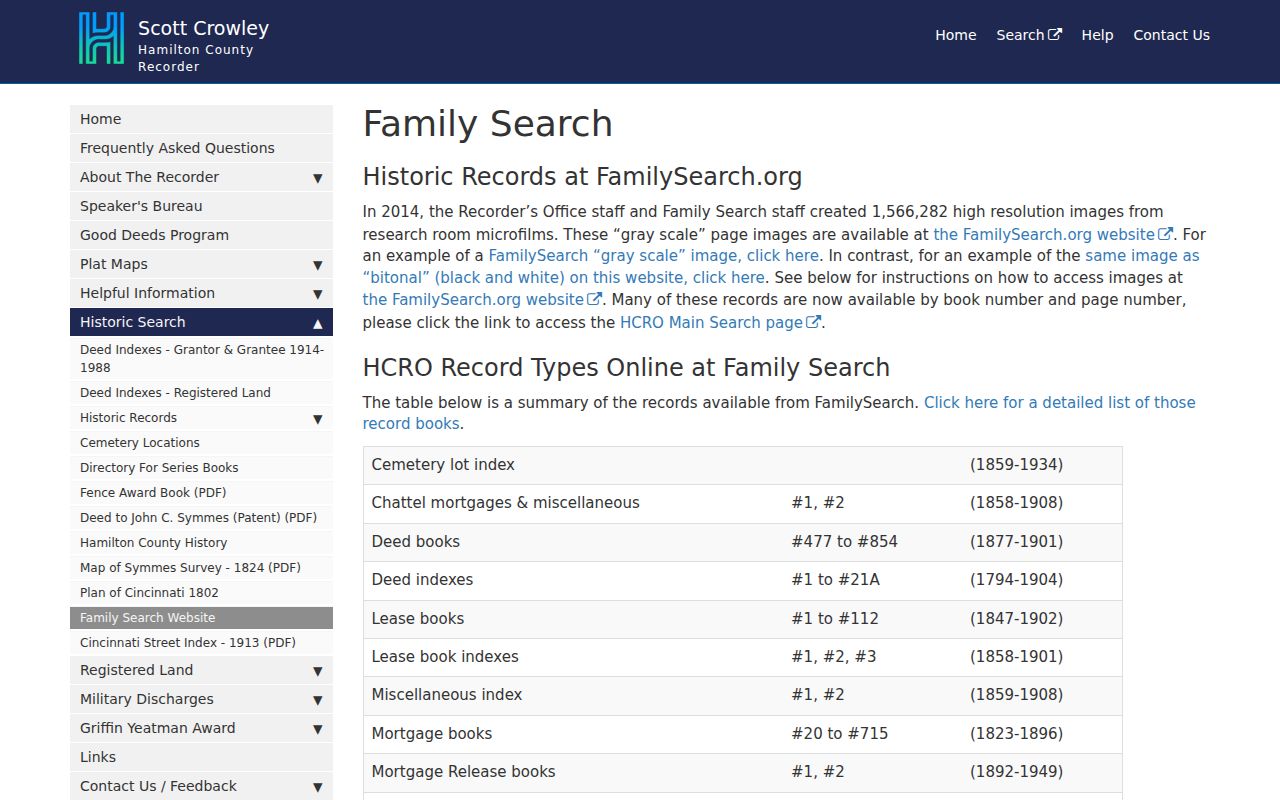
This Cincinnati source supports a document-first method: preserve the historical index citation, then inspect the page image and legal description before linking it to an address.
Cincinnati Previous Residents Address Shift
Most Cincinnati street addresses changed in 1895. That makes a visual match between an old directory number and a modern address unsafe. For a pre-1895 entry, CHPL points researchers to the 1883/1884 Robinson atlases and the 1891 Sanborn maps for the old-numbered landscape. Use 1904-and-later Sanborn maps for the newer number system, then compare the nearest map, directory date, parcel description, and cross streets.
The CHPL House History guide supplies this Cincinnati bridge and also identifies city directories, maps, and property resources. Preserve the old form exactly in a research note. A current map may help orient a parcel, but it cannot convert an old number by itself.
The House History guide is the source for this historical-address view.
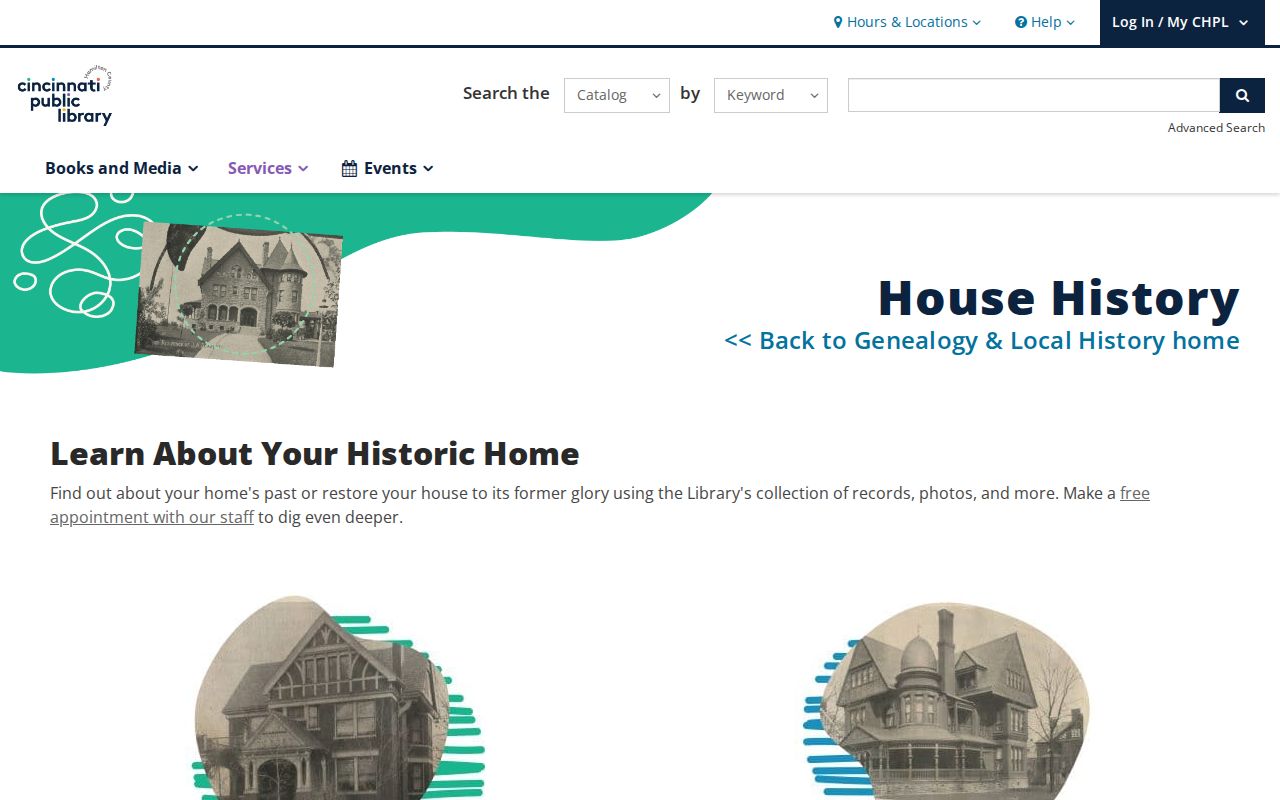
For Cincinnati address-history research, the guide helps determine which map and directory layer belongs to the address form printed in the historical record.
Cincinnati Past Residents in Directories
The household layer begins with Cincinnati City Directories, which CHPL describes as reaching back to 1819. A printed entry can include an owner or occupant name, spouse, occupation, and address, but it only establishes what the volume printed for that year. The historical collections themselves are available through the Cincinnati city directory page; for an address trail, choose the street and householder tools rather than relying only on an alphabetical name list.
Pink Pages began in 1925 and placed addresses on a street in numeric order. By 1941, the same reverse-address approach was called the Criss-Cross Directory. These sources can show who was printed at an address in a particular volume. They do not establish the exact move day, every member of a household, or a continuing connection after the volume's date.
For a missing year, contact CHPL's Genealogy & Local History Department or consult its in-library resources. An OCR miss is not a final absence finding. Test a surname root, initial, street form, and likely spelling, then inspect the scanned page.
Cincinnati Previous Residents Census Pairing
Pair a Cincinnati directory year with the closest released federal census, then add the ward or enumeration-district map. The directory supplies an annual or near-annual address layer. The census can add a dated household view and relationship context that the directory normally lacks. Transcribe the printed address and page reference first, because an address translation may be needed before the records can be compared.
- Choose a directory entry and retain the printed year, name form, address, and page or image citation.
- Use the nearest census year that is publicly released, then compare the ward, enumeration district, and address against the period map.
- Check the property trail separately for the same period, keeping recorded owner, tax field, and directory household as distinct observations.
- Use an obituary index, cemetery record, or Probate file only as a date-specific follow-up, not as a substitute for the address record.
The 1950 Census search provides name, city/county, and enumeration-district routes, while CHPL notes that its library access supplies additional census resources.
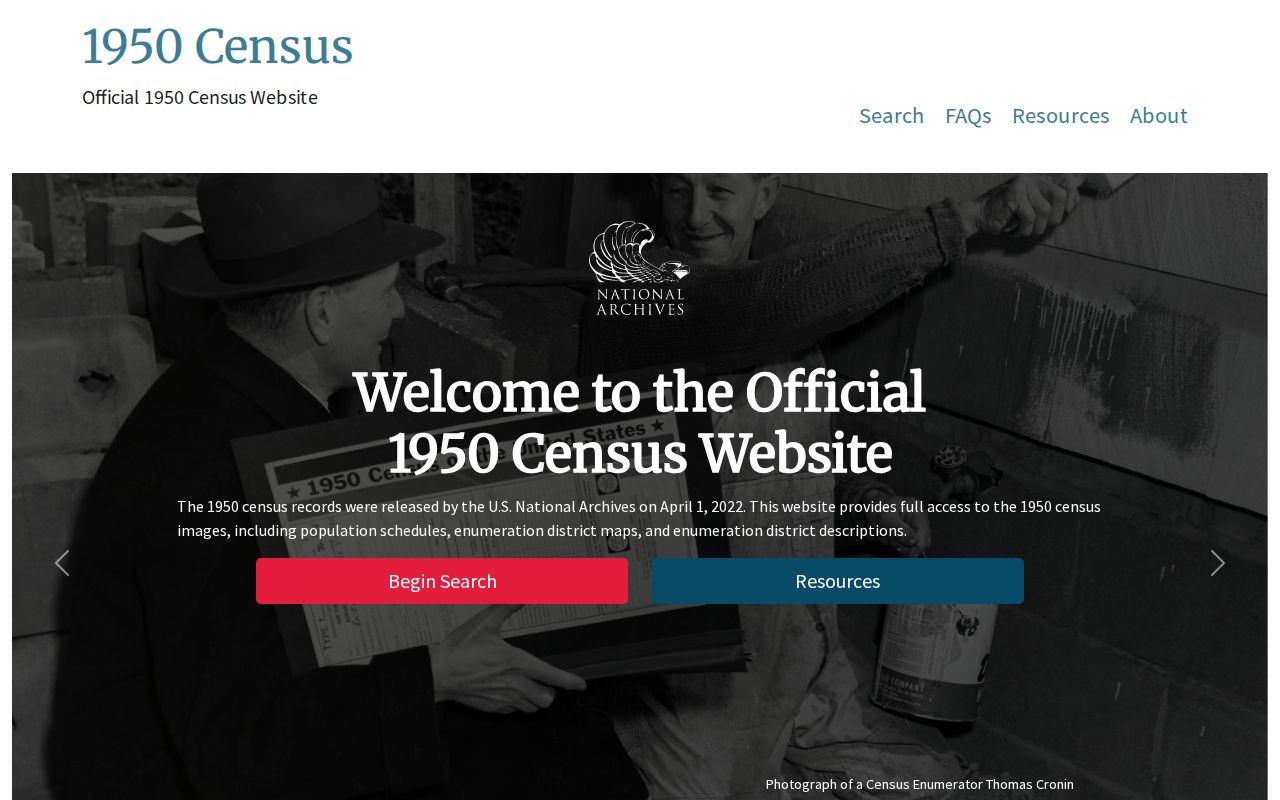
This Cincinnati image marks the newest released federal census layer and reinforces the need to pair a census finding with its directory year and map context.
Cincinnati 1884 Records Recovery
The March 1884 courthouse destruction is a real break in Cincinnati historical research, not a reason to label the whole period empty. The Hamilton County Law Library reports that the riot-era fire destroyed court records and reports of historical and genealogical value. For an estate or administration lead near that period, look for the particular record series rather than inferring that a broad family record must be gone.
The FamilySearch Ohio, Hamilton County collection identifies restored administration proceedings for 1884-1915, among other category-specific material. The collection reported 1,566,282 browseable images when inspected. Browse by the listed record type and year, and distinguish a restored series from an original surviving volume.
Note: A restored administration series can supply a valuable Cincinnati lead, but it does not prove that every record lost in 1884 was reconstructed.
Cincinnati Previous Residents in 1890
The 1890 census deserves a Cincinnati check rather than a blank label. Most general schedules were later destroyed, yet the National Archives identifies surviving general-population fragments for Cincinnati, Hamilton County, Ohio, in M407. Ohio also has surviving special schedules for Union Civil War veterans and widows. A negative result in one fragment should be recorded as a limited search result, not a conclusion about an address.
Use the National Archives 1890 census resources with 1889-91 directories, period maps, deeds, newspapers, and cemetery evidence to bridge the wider gap. Each record should keep its own date and source citation. That approach leaves uncertainty visible instead of forcing a continuous household story.
The National Archives page is the source for the surviving 1890 material and its limits.
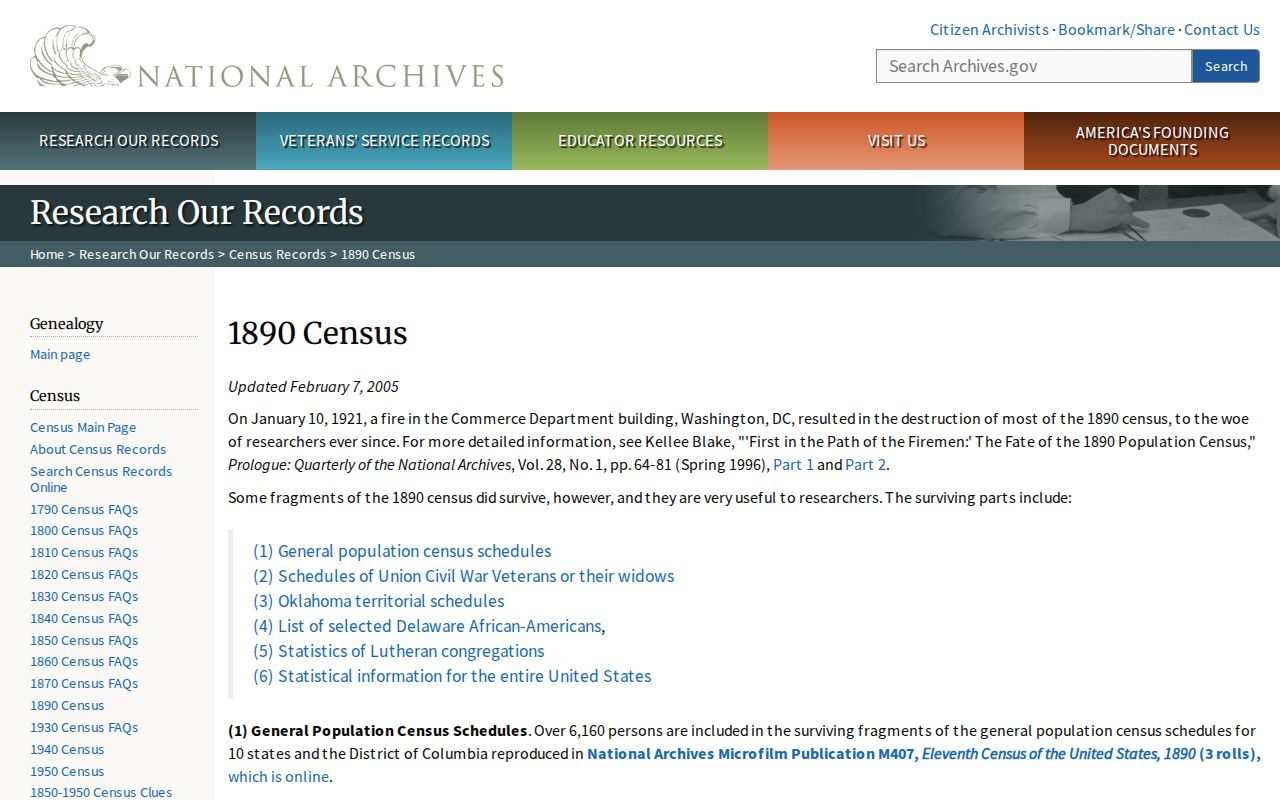
For Cincinnati address-history research, the surviving-fragment notice is a reminder to test the narrow federal record and then rely on corroborating local sources for the surrounding years.
Cincinnati Previous Residents Limits
Use Cincinnati address history for family research, estate questions, preservation work, or personal curiosity. Keep claims role-specific: a tax-owner field identifies a tax record, a grantee identifies a recorded recipient, and a directory entry identifies what was printed at an address on that date. CAGIS and Auditor screens assist with parcel geography, while the Recorder instrument and legal description control the documented title trail.
If a Cincinnati parcel, street form, or legal description conflicts after those checks, retain the conflict and ask the relevant custodian for the narrowly identified record. The last verified instrument is a stronger result than a guessed link.