
Finding Cincinnati Resident Records
Cincinnati has no one official household list. Hamilton County keeps property and recorded-document systems for land, the Board of Elections maintains registration information, and the courts keep case indexes. The public library preserves city directories and local-history material. Choose the source by the question. A parcel record can anchor an address, while a court or deed result identifies a party's role at a stated time. A historical directory gives a printed snapshot, not a present-day confirmation.
Begin with a known name, street address, or era. Check each result against another source before treating it as a match. A tax mailing address can differ from the property location. A recorded party may be a lender, trustee, or seller. A voter-status result applies to a submitted individual and address rather than a whole block. That discipline makes a Cincinnati residents directory search useful without turning limited public records into claims they cannot support.
- Use the County Auditor's address, owner, or parcel search to establish the parcel and its situs.
- Check the transfer facts and legal description before following a recorded-document lead.
- Use the Board's exact-person registration form only when both a name and address are known.
- Search the Recorder, Clerk, Probate Court, or CHPL collection that matches the record type and date.
- When a nonexempt record is not online, make a narrow request to its actual custodian under Ohio's Public Records Act.
Note: Preserve the source URL, access date, record number, and displayed role so later checks do not merge unlike records.
Cincinnati Resident Records Offices
The Auditor, Recorder, and Board of Elections are the main current-record starting points for a Cincinnati residents directory search. Their files overlap in address detail but not in purpose. The Auditor provides a tax-parcel view, the Recorder provides the recorded instrument trail, and the elections office offers individual registration confirmation. Court and Probate records are separate systems. For a longer address sequence, use the Cincinnati street directory workflow after a parcel has been identified.
Hamilton County Recorder's Office
138 E. Court St., Room 205
Cincinnati, OH 45202
513-946-4571
Hamilton County Board of Elections
4700 Smith Rd.
Cincinnati, OH 45212
513-946-8500
Cincinnati Parcels Lead to Deeds
The Hamilton County Auditor Property Search is Cincinnati's practical address-to-parcel start. Its Street Address tab accepts House # Exact/Low, House # High, and Street Name. Owner search uses an Owner/Organization/Other Name field, and Parcel ID accepts all or part of an identifier. Most county parcel IDs have thirteen characters. The result limit is 1,000, so a short or broad name should be narrowed instead of read as a person list.
| Auditor search | Field | Useful return |
|---|---|---|
| Street Address | House # Exact/Low, High, Street Name | Active taxable parcel and situs lead |
| Owner | Owner/Organization/Other Name | Tax-record owner candidates |
| Parcel ID | Parcel Number | Exact parcel record |
The property summary separates situs, tax mailing, legal-description, value, and transfer fields. Its Transfer tab gives a prior/current owner lead, conveyance number, date, and amount. A mailing address is correspondence data, not proof of where someone lives. The Auditor's FAQ advises a nearby range, aerial imagery, and parcel layers when a street format fails. That check is especially useful where a postal address and a taxable-parcel address differ.
See the Auditor property-search screen before beginning an address trail.
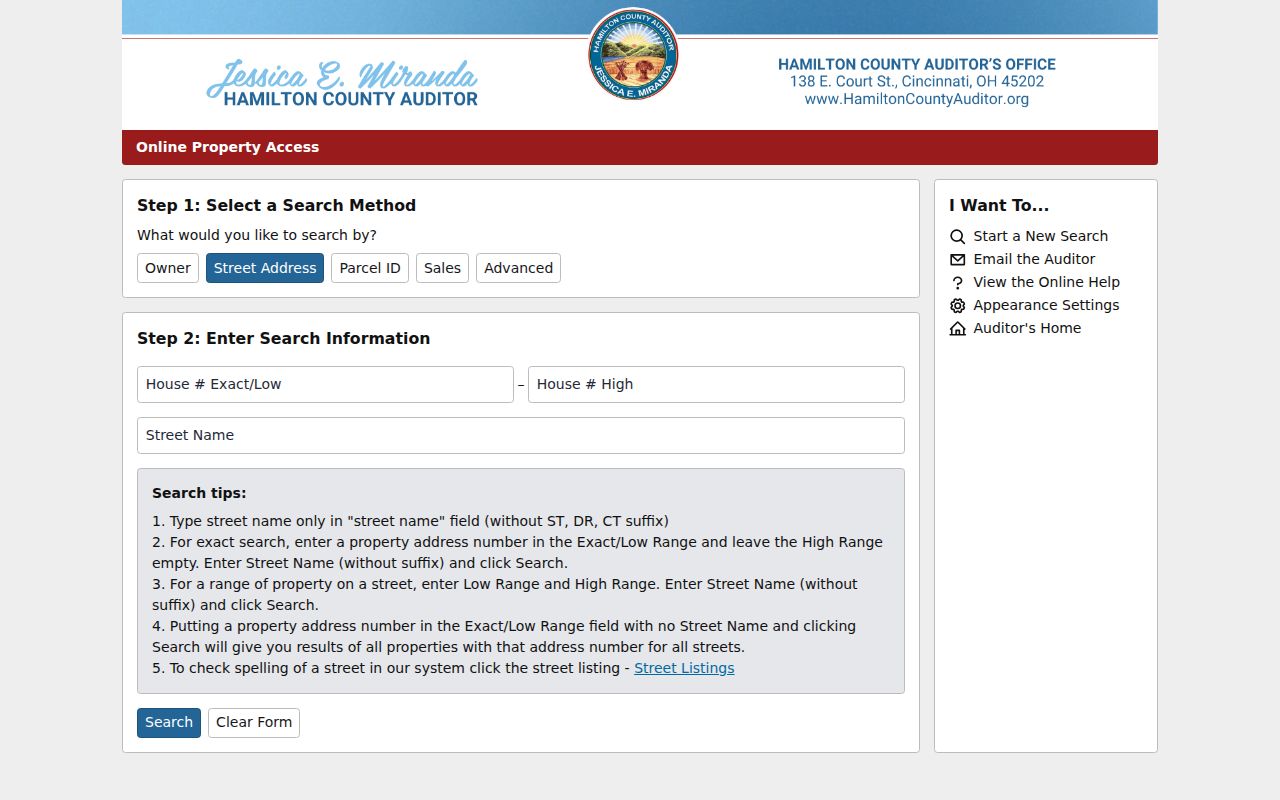
The search screen keeps the parcel handoff visible: it is the starting record for a Cincinnati residents directory address, not a register of everyone at that address.
Cincinnati Recorded Name Trails
Once the parcel and legal description are known, the Recorder's Acclaim index can test a conveyance number, Auditor number, Book/Page, document number, or party/date search. A result may show document number, type, executed and recorded dates, amount, Book/Page, conveyor, conveyee, remarks, and related documents. Those fields establish a recorded role, not an automatic residence conclusion.
For most documents from 31 May 1988 forward, the Recorder describes its online name route as the normal method. Earlier work moves to grantor-grantee indexes and Book/Page. The historic route reaches deeds far earlier, but a bare index row is not the same as the instrument. Compare the legal description and party direction, then use the image or the Recorder counter if a needed public copy is not remotely available. The Recorder is at 138 E. Court Street, Room 205, and lists weekday hours from 7:30 a.m. to 4 p.m.
The Public Document Inquiry has distinct search modes rather than a single name box.
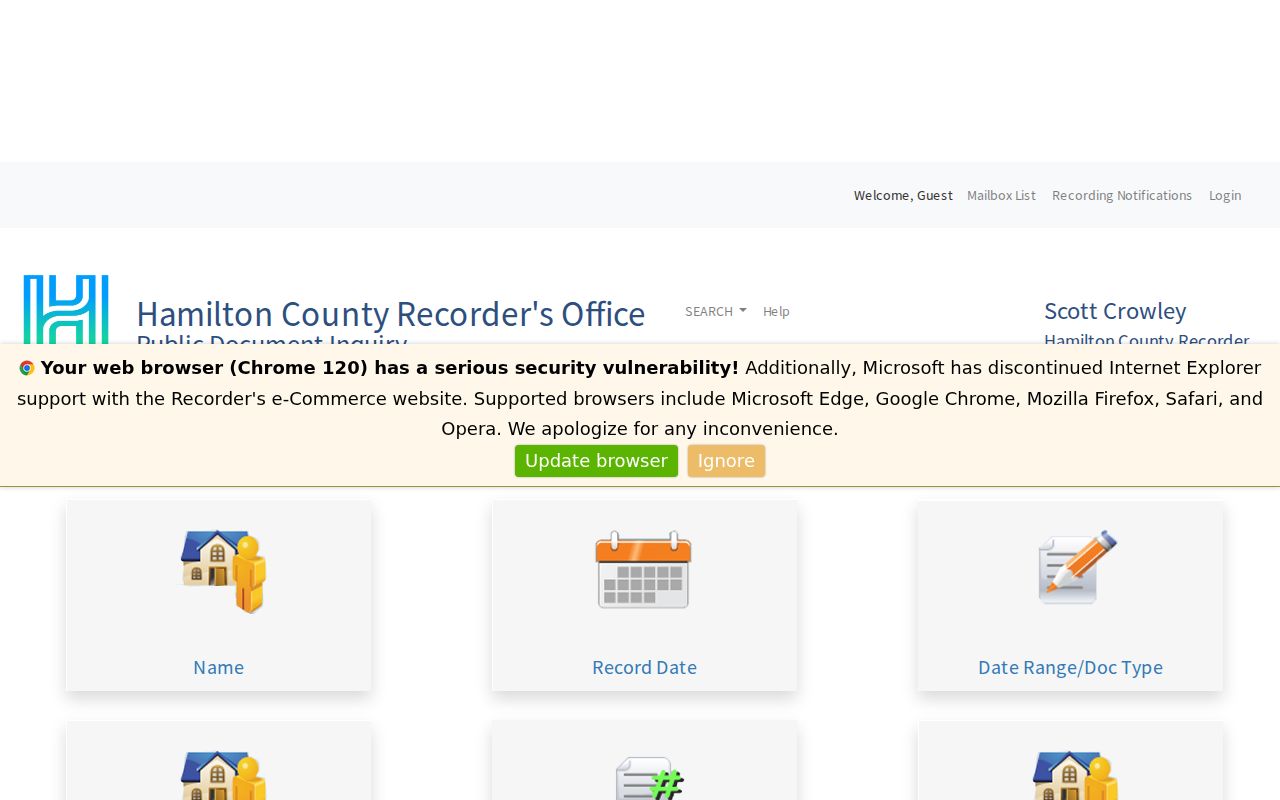
Use a parcel or instrument identifier beside the party name to keep an index hit tied to the correct Cincinnati property trail.
Cincinnati Voter and Court Checks
Hamilton County's registration-status form is a narrow confirmation tool. It requires first name, last name including suffix, street number, street name, street suffix, and ZIP Code. A returned record can show the submitted address, precinct, polling place, and districts. It is not a way to browse a street or infer a full household. The Board also has public voter-list exports by district, precinct, and party selection, subject to statutory redactions and protected registrations.
For a case lead, use the Hamilton County Clerk of Courts system, not the Recorder. The Clerk separates Common Pleas, Municipal, domestic-relations, and appeal categories, while Probate keeps estate, marriage, and archive material in a separate system. A case number, caption, party role, date, and docket status should be recorded together. Some public documents are not remotely displayed, so a no-result online does not prove a case or record never existed.
The Clerk's official records-search menu shows the available court routes.
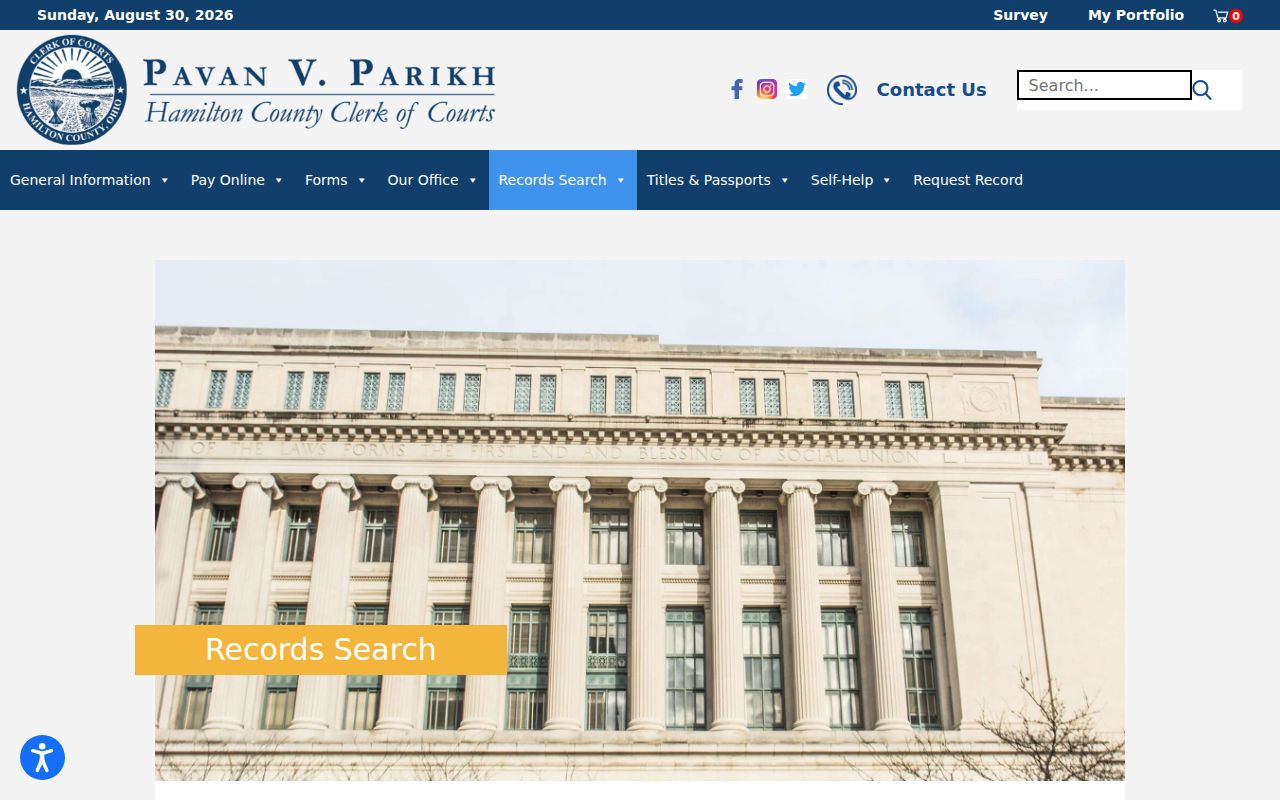
A Cincinnati court result is strongest when its court category and party role remain attached to the case number.
Cincinnati Current Resident Directories
Current Cincinnati resident directories are a group of purpose-built records, not a single database. The County Auditor is the best starting point for a tax parcel. The Recorder is for parties to instruments. The elections office handles a person-and-address registration confirmation. A court or Probate record shows a case participant or estate role. Treat each as evidence with its own date and limit. An address owner, a voter, and a deed grantee can be different people or the same person at different times.
| Cincinnati source | What it identifies | Custodian | Access path |
|---|---|---|---|
| Property summary and transfer card | Tax-record owner, situs, parcel, transfer lead | County Auditor | Public search |
| Registration-status return | Submitted person's registration and precinct | Board of Elections | Exact person and address form |
| Acclaim instrument index | Named document parties and recording facts | County Recorder | Free index |
| Case and Probate indexes | Party, estate, marriage, or docket lead | Clerk or Probate Court | Portal, counter, or copy request |
| Organization and historical collections | Dated affiliation or household context | CHPL and archives | Collection or research-room access |
A name question often needs more than one record. The Cincinnati resident lookup process sets out a one-person confirmation sequence that keeps property, registration, court, and historical roles distinct.
Cincinnati Vital Record Routes
Ohio permits an ordinary certified vital-record copy to any applicant who submits the signed application and fee, subject to record-specific exceptions. The Cincinnati Health Department offers online, telephone, mail, and counter channels for Ohio birth and death certificates. Its counter is at 1525 Elm Street. The City lists birth certificates at $22 and death certificates at $27, with a nonrefundable $3 search fee when no certificate is found. Marriage licenses are a Probate Court record, and a certified divorce record comes from the Clerk where it was granted.
For historical work, the custodian changes with the event and date. Ohio History Connection's death index covers Ohio Department of Health certificates for 1913–1944 and 1954–1970. The University of Cincinnati Archives & Rare Books has Cincinnati birth and death card material from 1865–1908, with some records to 1912. Ordinary current-record access does not open the medical portion of a birth record, adoption material, or a recent death SSN without the law's stated conditions.
The City Health Department's certificate information is an official request channel.
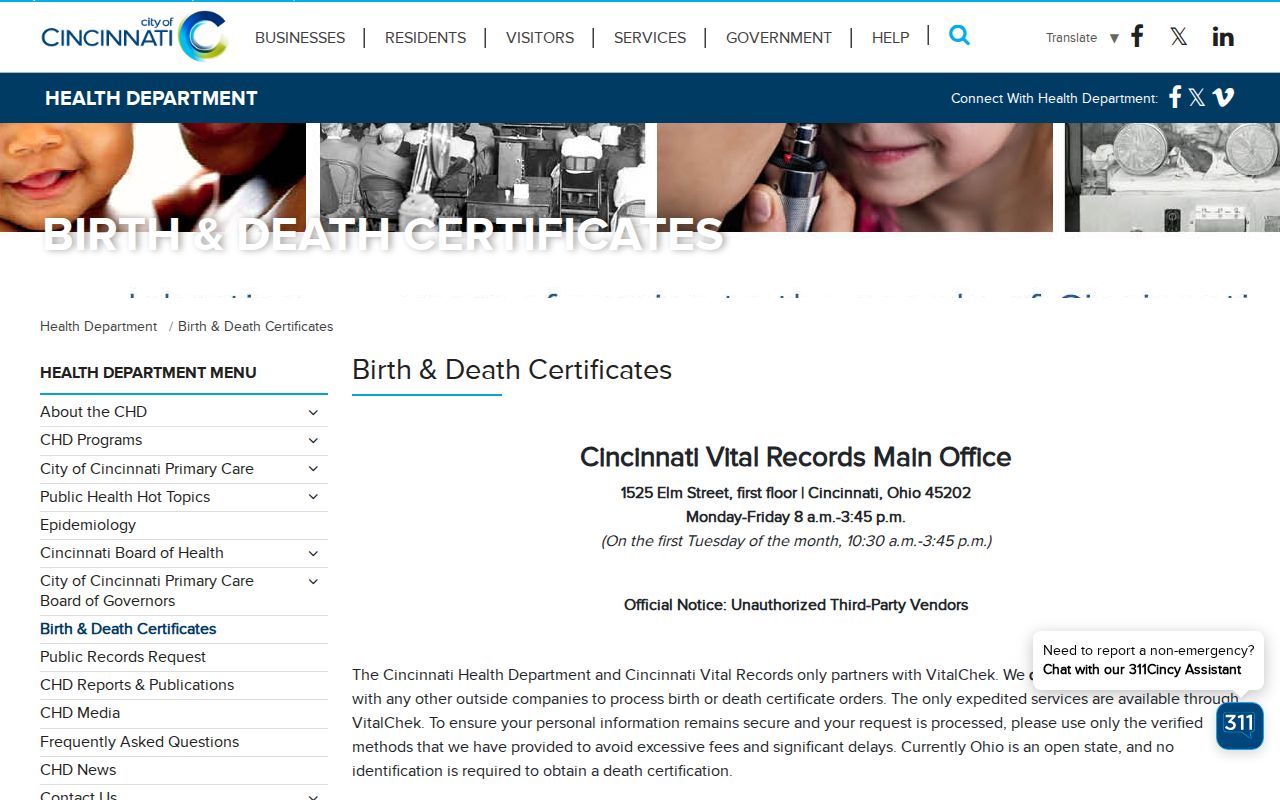
Use the event type and date to choose the Cincinnati, county, state, or archival custodian before placing an order.
Cincinnati Probate and Heir Records
The Hamilton County Probate Court Record Search is separate from the general Clerk portal. Its case index generally starts in 1974, dockets in 1993, documents in 2000, and marriage-index coverage in 1984. Archive Search reaches earlier material, with some categories dating to 1791. Use an estate or guardianship filing for a documented case role, then inspect the accessible filing rather than assuming a relationship from a surname.
Probate, directory, obituary, and deed sources can form a family-history trail when their dates agree. They should not be collapsed into a current contact list. If an item is not public online, ask the Court about the identified case or archive record. Sealed, adoption, and protected records have their own rules.
The official Probate search provides its case, marriage, and archive choices.
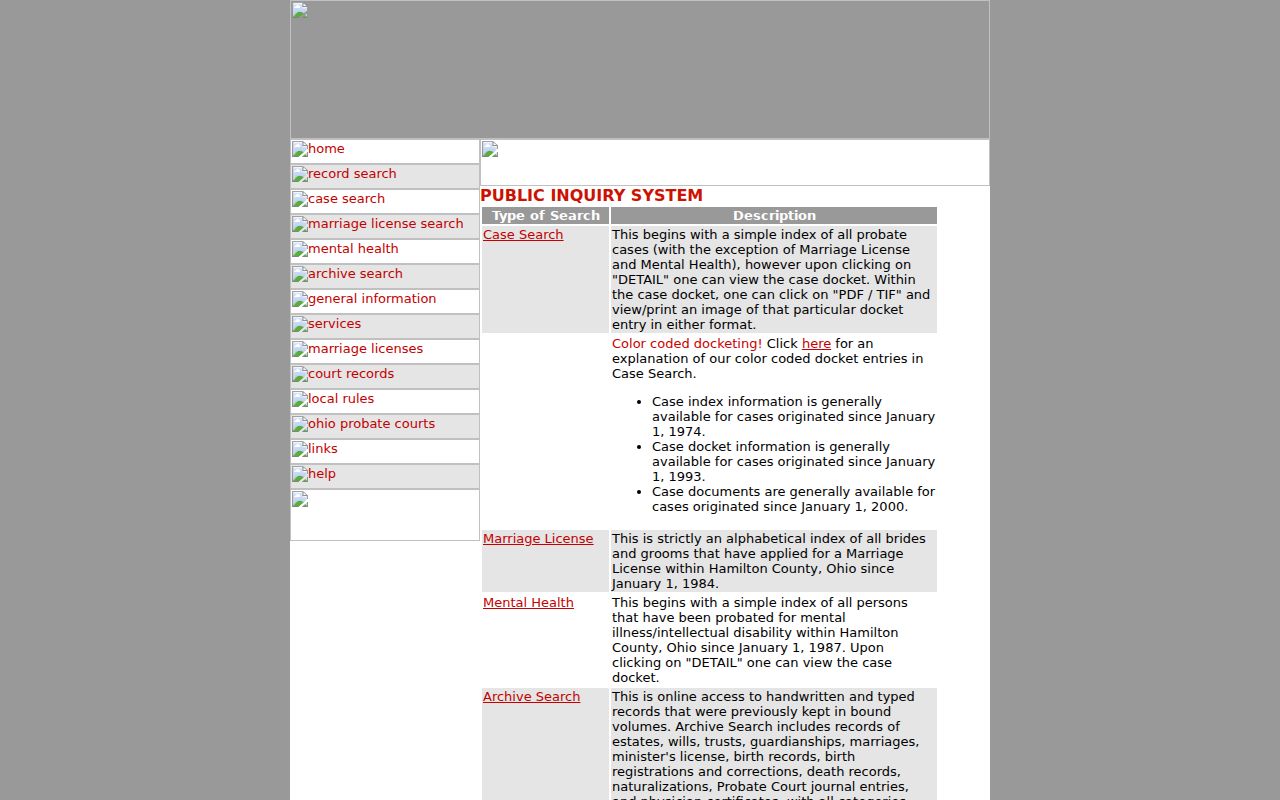
Separating a Probate archive result from a Clerk result prevents a Cincinnati residents directory search from sending a record request to the wrong court.
Cincinnati Public Request Fallbacks
When a search screen does not expose a nonexempt record, Ohio Revised Code 149.43 supplies the general public-records route. The requester can inspect records promptly during regular business hours and seek copies within a reasonable period. An office may ask for clarification of an overly broad request, but identity and intended use are voluntary unless a specific law says otherwise. A denial should identify its legal basis, and nonexempt portions should be released with redactions visible.
The City of Cincinnati directs municipal requests through its public-records page and GovQA route. Name the department, record series, address or case number, date range, and desired format. City service, permit, code, and Council records are municipal records, not substitutes for Recorder deeds or court files. A precise request is more likely to find a retained record than a request for every item about a person.
The City's request page shows the local route when an address-based City record has no self-service result.
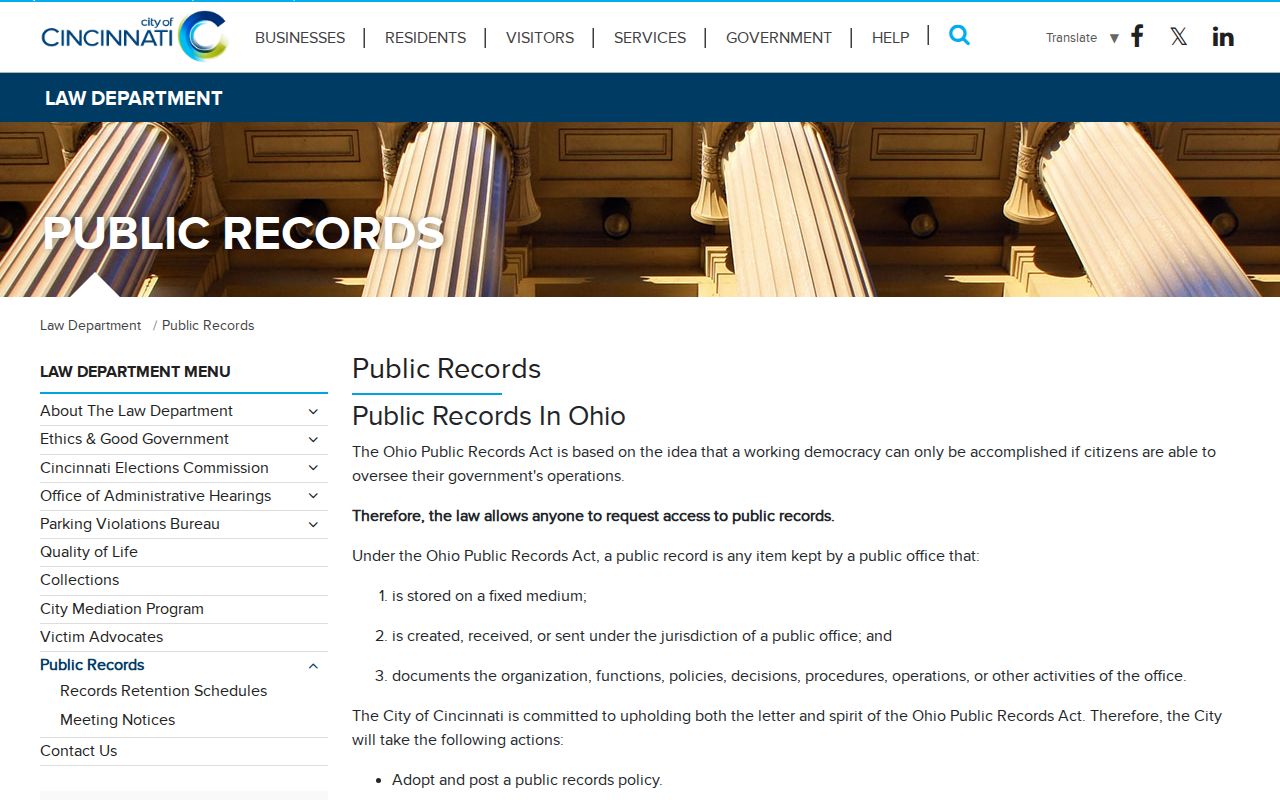
A case number or exact address makes the Cincinnati request process easier for the public office to search and explain.
Historical Cincinnati Resident Directories
The Cincinnati & Hamilton County Public Library, or CHPL, is the local historical starting point. Its House History material says Cincinnati city directories reach back to 1819, and its digitized City & County Directories collection holds early volumes and many Williams Directory Company issues. The 1905 volume calls itself the 55th annual issue and the 1925 volume the 75th. The public digital collection is a selection, not proof that every annual issue is online, so an unscanned year should be requested from library staff.
Directories are dated evidence. A personal entry may list surname, initials, work, home address, and a notation such as h for home or wid for widow. It cannot prove a complete household, ownership, or a present address. For the full collection, entry-reading, and household tracing method, consult the Cincinnati city directory resource.
Cincinnati Directory OCR Needs Checking
The CHPL Digital Library supports full-text search within a record, collection search, page navigation, and links to PDF parts. A surname, street, business phrase, or first initial can lead to a scanned volume. CHPL warns that optical-character-recognition output is not always accurate. A no-result is therefore not evidence that the printed entry is absent. Try a surname root, variant spelling, initial, and address phrase, then inspect the page image.
That caution matters in Cincinnati because the 1905 Williams pages use surname continuations, cross-references, occupation abbreviations, and outside-place annotations. The collection also contains street and municipal material. Search the section suited to the task: alphabetical name pages for a name, a street or householder section for an address, and map material for changed numbers. Keep the printed volume year and page identifier beside any transcription.
The CHPL Digital Library is the source for Cincinnati's searchable directory collection.
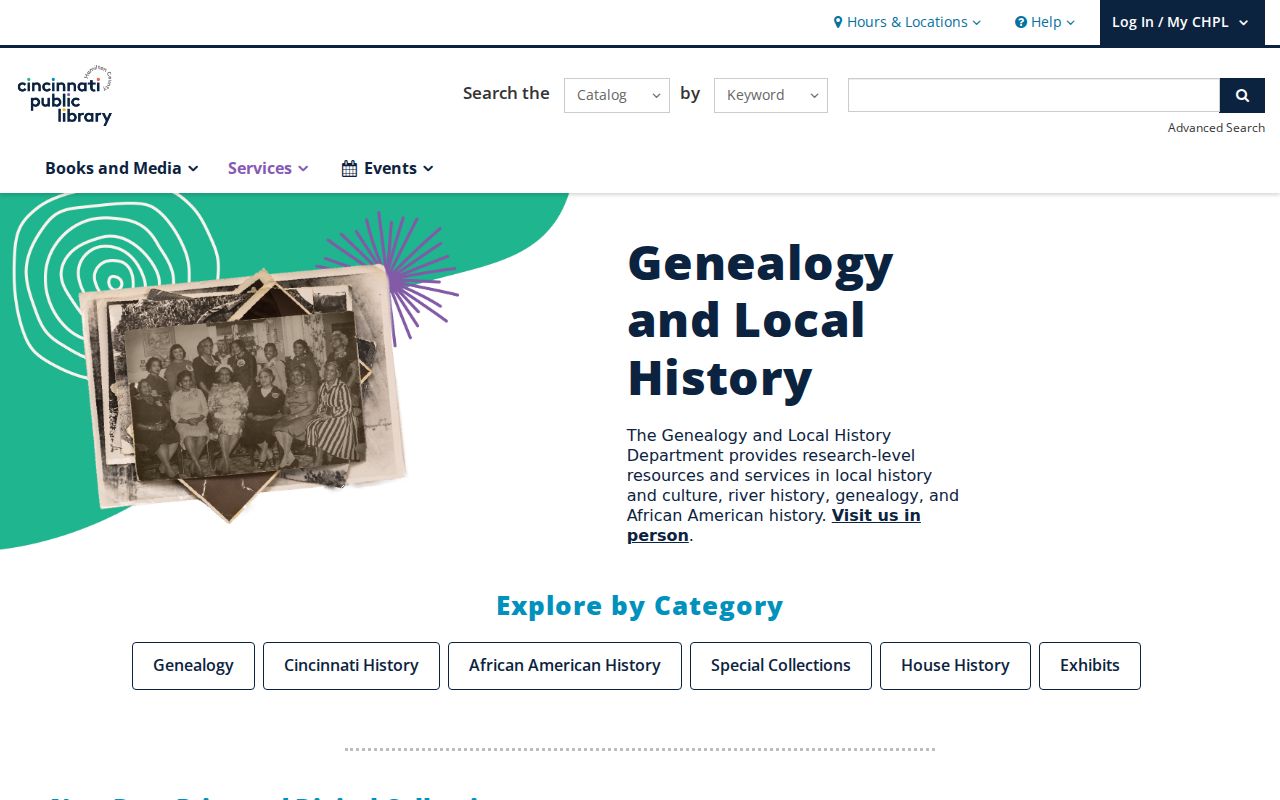
Library collection results add dated Cincinnati context, but the scan image is the final check on an OCR hit.
Cincinnati's 1819 Directory Scale
Cincinnati's first known directory dates to 1819. A later directory's historical list reports that the earliest "A Citizen" volume contained 1,693 names. That count is a useful scale marker, not a census. It shows why an early directory can be a strong lead for a person, business, or address yet still omit many people living in the city. The early publisher succession and the later Williams run are documented in CHPL's collection.
Printed locality labels also need a date check. The 1905 Williams volume includes Avondale, Bond Hill, Clifton, Evanston, Hyde Park, Linwood, Riverside, Westwood, and Winton Place. Record the locality exactly as printed, then use a year-appropriate map before equating it with a current Cincinnati boundary. This is particularly important when a family moved across a neighborhood that was separately named or differently bounded at the time.
Note: A directory entry documents what its publisher printed for that volume year, so pair it with a map, census, deed, or obituary before extending the conclusion.
Cincinnati Address Changes Need Maps
Most Cincinnati street addresses changed in 1895. A familiar modern number can therefore point to the wrong parcel in a historical search. CHPL recommends the 1883/1884 Robinson atlases and 1891 Sanborn maps for old numbers, then 1904-and-later Sanborn maps for the new system. Pair the closest map with the directory year before carrying an address into the Auditor or Recorder records.
Pink Pages began in 1925 and were called the Criss-Cross Directory by 1941. They arrange addresses along a street in numeric order, making them the historic address-first layer. A criss-cross result identifies an occupant or owner printed at that address for that year. It does not replace an ownership chain, a census household, or a current-address confirmation.
- Roll
- A list kept for a specific public or organizational purpose, not a universal resident list.
- Index
- A finding tool that points to an underlying record, image, book, or case.
- Parcel
- A defined tax-property unit used by the Auditor and linked to a legal description.
- Criss-Cross directory
- An address-ordered directory used to start historical research from a street number.
Cincinnati License and Business Limits
State records can sometimes corroborate a public affiliation, but they have their own limits. Ohio eLicense provides board-specific credential verification. The official search guidance uses last name plus first initial and a board choice, or a complete license number. A displayed credential can include status, board, type, number, dates, and location fields supplied by that board. It is not a general current-address record.
Ohio Business Search has an Agent/Registrant route, but the Secretary of State says it does not maintain ownership or officer lists. A statutory agent is a service-of-process contact. That role should not be turned into a personal ownership or residency claim. Use an official filing, deed, or another independent record to test a narrow question.
The state credential portal is a useful Cincinnati record check when the profession and board are known.
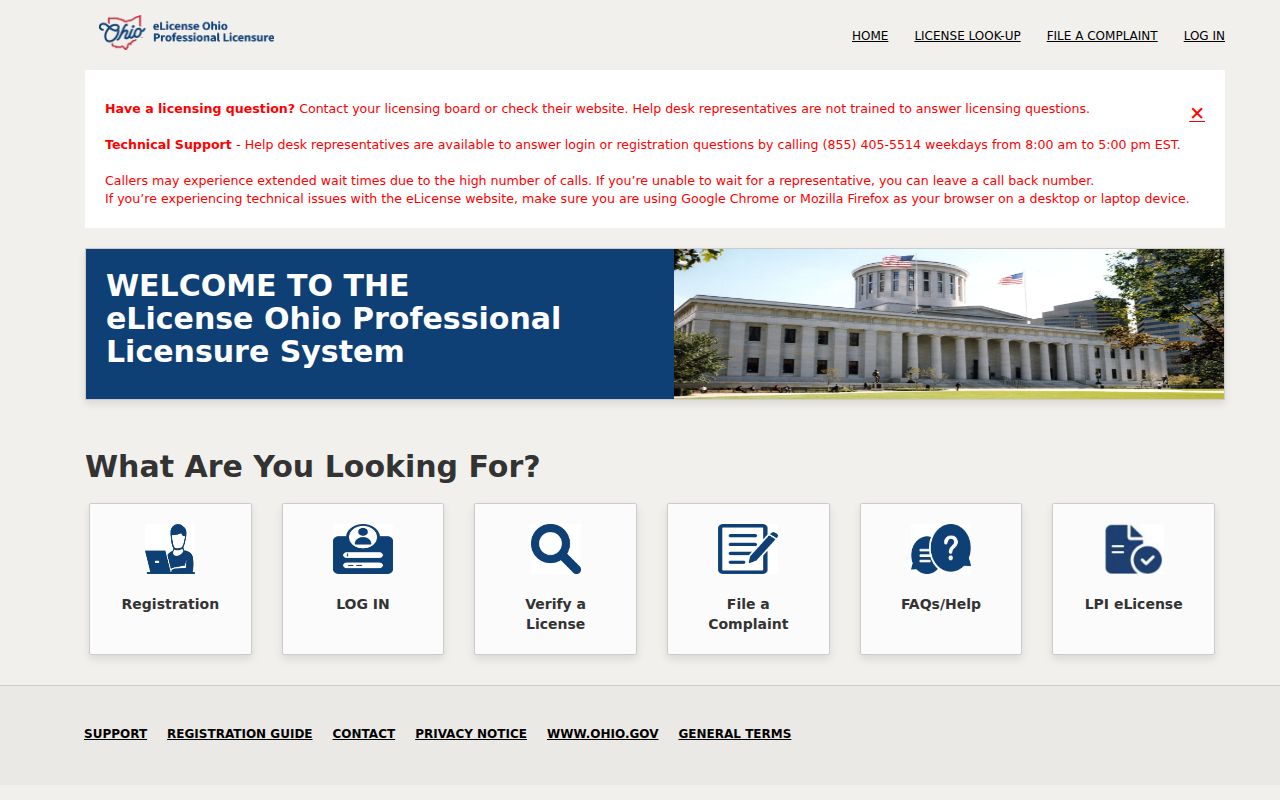
A license result can confirm the status shown by its issuing board, while a Cincinnati residents directory search still needs separate address evidence.
Cincinnati Records Have Privacy Limits
Ohio's Public Records Act opens many records, but it does not erase exemptions. Safe at Home participants have confidential address and voter arrangements. Voter statutes withhold specified identifying and safety fields. Sealed, expunged, juvenile, adoption, medical, and protected court records need the procedure set by law. Ohio's online-record redaction process under R.C. 149.45 is directed to the custodian and is not a promise that a historic record disappears everywhere.
Official records and commercial people-finding products serve different purposes. A county index identifies a custodian, record date, and often a way to request an original. Commercial compilations may be incomplete or stale and do not replace the source record. When a Cincinnati result matters, return to the office that created it and preserve the identifier, date, and role shown.